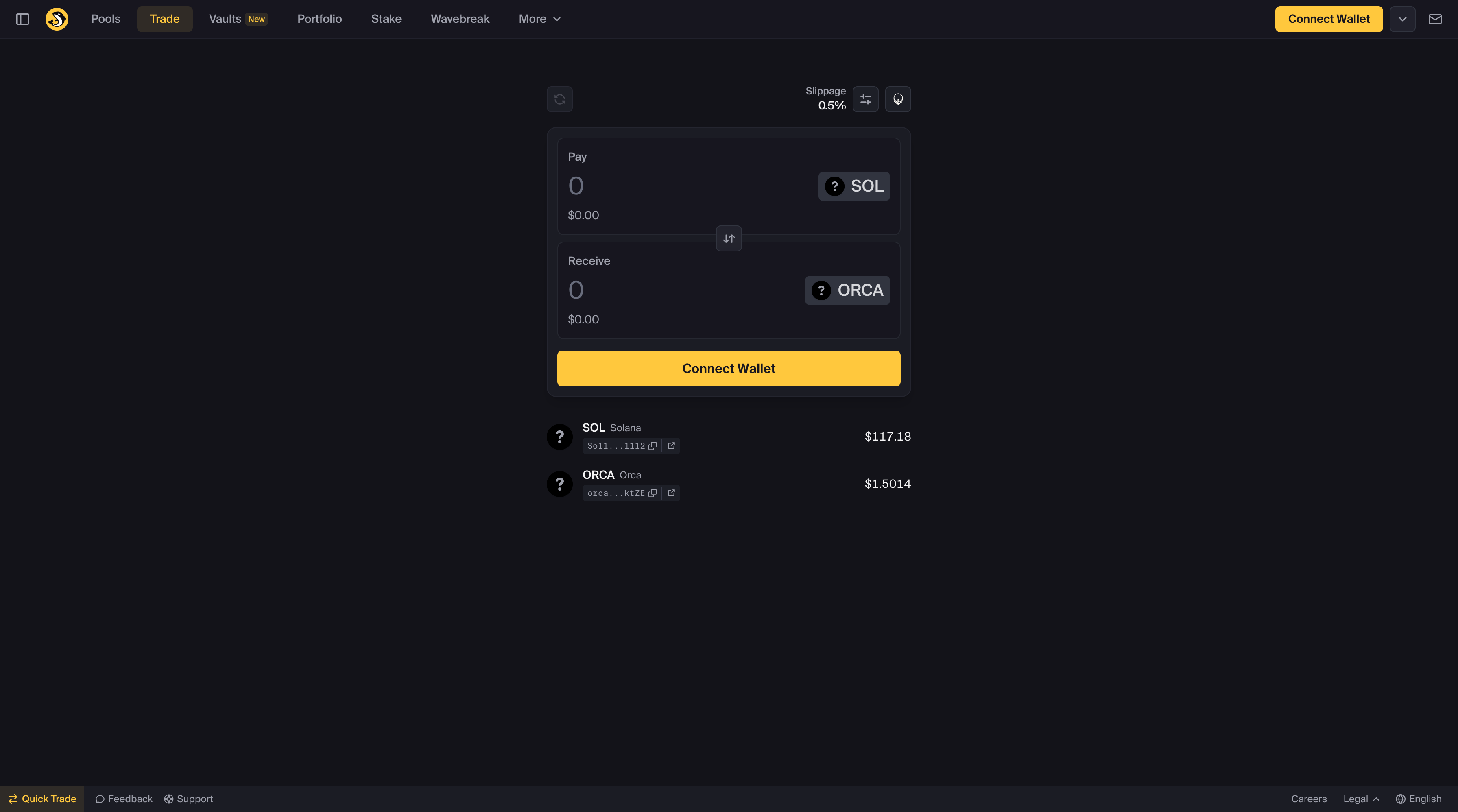
Solana is built for one thing above all else: speed. Transactions settle quickly, fees stay low, and the network’s composability makes it easy for users to move from one DeFi action to the next. But for a chain to feel truly useful, it needs more than raw infrastructure—it needs apps that translate those capabilities into everyday financial experiences.
That’s where Orca Solana comes in.
Orca is a decentralized exchange (DEX) and liquidity platform on Solana that has earned a reputation for clean UX, strong liquidity, and an ecosystem-first approach. For many users, Orca isn’t just “a place to swap tokens.” It’s a gateway into Solana DeFi: providing liquidity, earning fees, adding positions to pools, and swapping with relatively smooth execution.
This blog explores Orca on Solana—what it is, why it matters, how it works at a practical level, what users should watch for, and where it fits in Solana’s broader DeFi story.
Orca is a decentralized exchange on the orca Solana blockchain. Like many Solana DEXs, it enables:
Token swaps (moving from one asset to another on-chain)
Liquidity provision (depositing assets into pools so traders can swap)
Earning from liquidity (typically through trading fees and incentives, depending on pool design)
Orca is commonly associated with a user-friendly interface and a focus on making DeFi approachable. While Solana’s speed is the foundation, Orca’s design attempts to make that speed feel usable—especially for people who are new to DEXs.
Orca’s success is deeply tied to what Solana does best:
1) Low fees = frequent on-chain activity
On networks with expensive transactions, swapping repeatedly can become painful. On Solana, the barrier is lower. That means:
More frequent trading
More active arbitrage and price alignment
A more responsive market environment
When the chain is cheap to use, DEXs benefit because users can experiment more.
2) Speed improves user experience
On Solana, you don’t wait long to see transaction results. For a DEX, that matters because trading is time-sensitive. Liquidity providers and traders both care about execution quality—fast confirmations reduce uncertainty.
3) Composability encourages better DeFi flows
Users don’t just swap. They often want to move into staking, lending, yield strategies, or token swaps via aggregators. Orca fits into this ecosystem by being a recognizable on-chain endpoint for trading and liquidity.
To grasp Orca, you don’t have to become an AMM engineer—but it helps to understand the basic mechanics behind DEXs on Solana.
Swaps (trading without a centralized order book)
Instead of matching buyers and sellers like a traditional exchange, Orca swaps using liquidity pools. A pool contains reserves of assets (for example, USDC and SOL). When you swap, you trade against the pool, and the pool’s pricing shifts according to its internal rules.
In other words:
Liquidity pools replace order books
Pricing emerges from the pool’s curve or mechanism
Traders pay fees that reward liquidity providers
Liquidity provision (earning while enabling trading)
If you provide liquidity to an Orca pool, you typically deposit one or both assets into that pool. Your share of the pool earns:
Trading fees generated by swaps
Possibly incentives for specific pools (depending on incentives programs)
Liquidity provision is attractive because it can convert on-chain participation into yield. But it comes with risks (more on that later).
One reason Orca Solana gets mentioned often by everyday Solana users is how it feels to use.
A good DEX experience is about more than functionality. It’s about reducing friction:
Clear swap interface
Straightforward wallet connection
Easy access to popular pools
A design that doesn’t overwhelm users
This matters because on-chain trading has historically had a steep learning curve: slippage settings, price impact, wallet approvals, and transaction confirmations can intimidate newcomers.
Orca’s UX aims to make swapping and liquidity provision less confusing, which supports broader adoption of Solana DeFi.
If you trade on Orca, the main things you care about are:
1) Slippage
Slippage is the difference between the price you expect and the price you receive. Even on fast chains, slippage can happen when:
Liquidity is low
The trade size is large relative to the pool
Market conditions change quickly
Orca’s liquidity depth and pool quality generally influence slippage outcomes.
2) Price impact
Price impact is similar to slippage, but often used to describe how much your trade moves the pool price. Large trades move pools more.
3) Route selection and aggregations
Some traders use multiple platforms or routing tools to find better prices. Orca Solana can be part of those routes—especially when its liquidity is competitive for specific pairs.
Practical takeaway: if you care about the best execution, check whether swapping directly in Orca or via routing/aggregators produces better pricing for your size.
Providing liquidity can be profitable, but it’s not “free yield.” The return you see depends on:
Volume in the pool (more swaps = more fees)
Your share of the pool
The asset price behavior over time
The pool’s mechanics
The big risk to understand: impermanent loss
Impermanent loss happens when the price of one asset diverges from the other while you’re holding them in a pooled AMM format. If you had simply held the tokens outside the pool, your outcome might differ.
Important nuance: impermanent loss is not always “bad”—fees can offset it. But you should understand that liquidity provision is exposed to market movement risk.
Range vs non-range liquidity (conceptual difference)
Some DEX designs use liquidity ranges or concentrated liquidity mechanisms, where LPs must think about where liquidity is placed. If Orca’s pool types involve such mechanics (or if a pool is structured in a way that changes how exposure works), that adds an additional layer: your yield may depend on whether trading stays within relevant price zones.
If you plan to become an LP, treat it as a strategy, not a bank account.
Many Solana DEX liquidity programs use incentives to bootstrap pools and attract volume. These incentives can include:
Fee sharing enhancements
Token rewards
Governance and ecosystem participation
Incentives are useful because they can align liquidity with demand. But they also change over time. A pool that is highly incentivized today may normalize later.
So if you’re making decisions based on rewards, it’s wise to separate:
Sustainable fee-based yield
Short-term incentive yield
A strong strategy often assumes incentives may decrease and asks: “Would this pool still be worth it if incentives were smaller?”
Solana DeFi includes many protocols: lending markets, liquid staking, yield aggregators, NFT ecosystems, and more. DEXs are the connective tissue.
Orca has remained relevant partly because:
It’s easy to access
It supports active trading pairs
It provides liquidity routes into broader DeFi
It has contributed to Solana’s “real usage” narrative, not just theoretical DeFi activity
In a growing ecosystem, DEXs don’t just compete on features—they compete on reliability, liquidity quality, and user trust.
To keep you informed about the progress of your delivery, we provide shipment tracking for most orders. Once your order is shipped, you will receive a confirmation email with a tracking number and instructions on how to track your package. This allows you to monitor the status of your shipment and estimate its arrival.
DeFi is powerful, but it’s also unforgiving. If you use Orca (or any DEX), keep a few safety principles in mind:
Verify you’re on the official site
Phishing pages are common. Bookmark the real URL and avoid random links.
Understand wallet approvals
Some transactions involve approvals that allow token spending. Only approve what you intend to use.
Start with small amounts
If you’re providing liquidity, begin small enough that you can learn without severe downside.
Use slippage settings thoughtfully
Too tight can cause failed transactions; too loose increases the chance of worse execution.
Be wary of illiquid tokens
Smaller tokens and new listings may have thin pools. That can mean high slippage and volatile execution.
While no one can predict the future exactly, strong DEX platforms typically evolve in these ways:
1) Better liquidity tooling
Users want dashboards, forecasting, and easier LP management. Improved insights help LPs adjust positions with confidence.
2) Integration with more DeFi primitives
Swaps and liquidity will increasingly connect to lending, staking, and yield strategies. Even if Orca Solana remains primarily a DEX, its ecosystem role may deepen.
3) Continued focus on UX
As DeFi grows, the biggest differentiator may become how understandable and efficient the experience is for both new and advanced users.
4) Ongoing pool and incentive innovation
Orca likely continues to explore liquidity mechanisms and incentives that match real market demand, not only short-term speculative interest.
Orca on Solana is more than a token swap page—it’s a practical gateway into on-chain liquidity and trading in an environment where speed and low fees make DeFi feel alive. Its value comes from combining:
Solana’s performance advantages
A DEX user experience that’s relatively approachable
Liquidity and pool depth that support real trading
An ecosystem mindset that fits into Solana’s broader DeFi system
For traders, Orca can offer efficient swapping with manageable slippage when liquidity is strong. For liquidity providers, Orca offers the potential to earn fees—but the strategy carries market and AMM risks like impermanent loss. The best outcomes generally come from understanding those risks and approaching liquidity as a deliberate plan.
If you’re exploring Solana DeFi, Orca is one of the places that helps you understand how the ecosystem works in practice: fast transactions, live markets, and liquidity that makes swaps possible.

Best AI Website Creator